

Joliet’s rich natural heritage is exemplified by areas like Pilcher Park, a 296-acre forest complex recognized for its high-quality mesic upland forest and diverse plant species. This park is home to over 270 native plant species and serves as a habitat for numerous bird species sensitive to habitat fragmentation. [Source]
Incorporating native plants into your own landscape can significantly contribute to local biodiversity. Native plants have co-evolved with local wildlife, providing essential food and shelter. For instance, native plants attract and feed native insects, which are crucial for many bird species during their breeding season. [Source]
To get started, consider the following native species well-suited to Joliet’s climate:
Recommended Native Plants for Joliet
Perennials
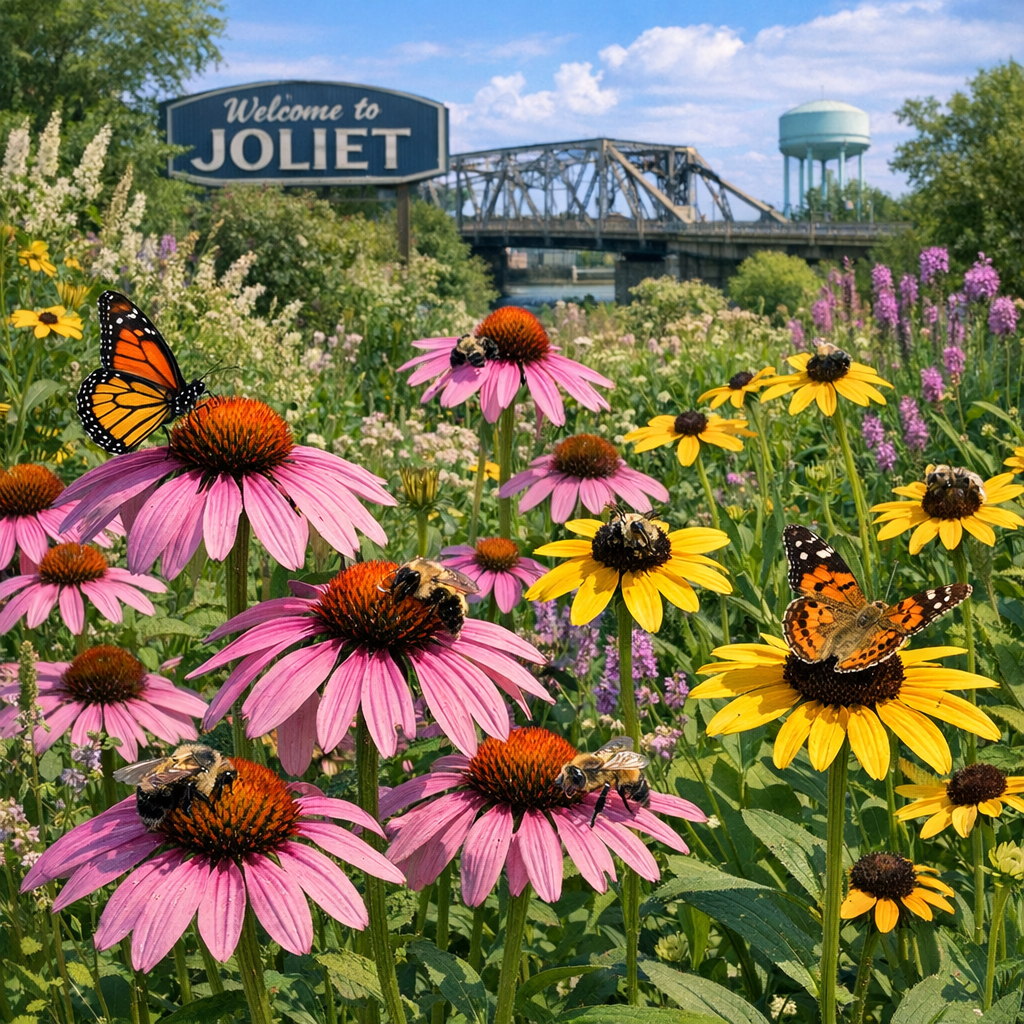
- Purple Coneflower (Echinacea purpurea): A hardy perennial that attracts pollinators and adds vibrant color to gardens.
- Black-Eyed Susan (Rudbeckia hirta): Known for its bright yellow petals and dark centers, this plant thrives in various soil types.
- Wild Bergamot (Monarda fistulosa): Also known as bee balm, it attracts bees and butterflies with its fragrant lavender flowers.
Grasses
- Prairie Dropseed (Sporobolus heterolepis): A fine-textured grass that adds movement and texture to landscapes.
By choosing native plants, you not only enhance the beauty of your property but also play a vital role in supporting Joliet’s local ecosystem. As Tara Neff, a local advocate, notes, “Beautiful creatures, including butterflies, bees, and birds, will come to your yard if you plant native species.” [Source]
For more information on native plants and their benefits, consider visiting local resources or contacting the Pilcher Park Nature Center.